The Problem With “100% Placement Guarantee”
You have seen the promises. Guaranteed placement. Job in 60 days. 100% success rate.
Very few institutes actually deliver on them. Many of those claims turn out to be false, and by the time you find out, your fee is gone and so are several months.
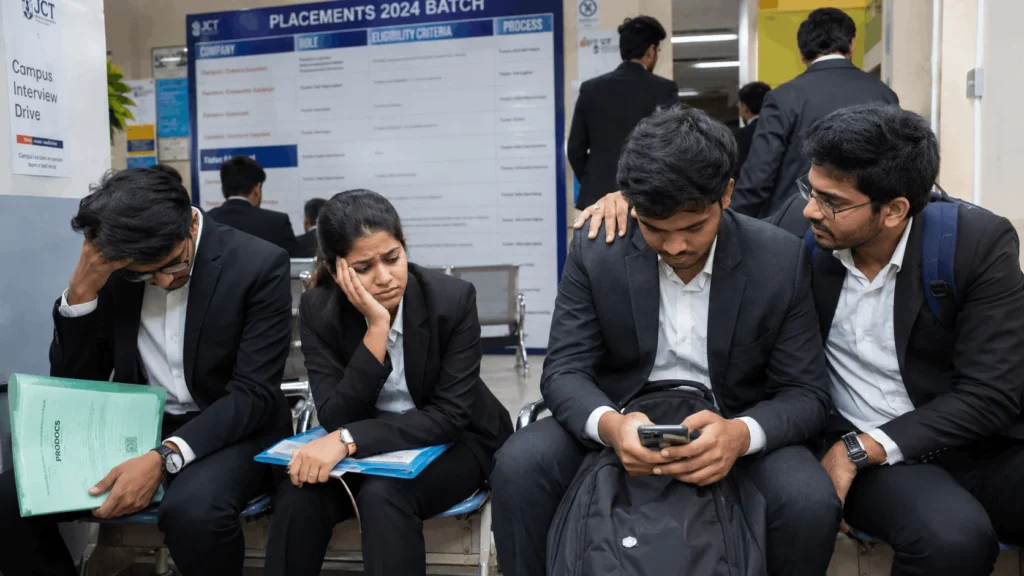
So how do you protect your time and money? How do you know whether you are paying for real training or for a marketing line?
You are not just looking for a course. You are looking for a trusted guide, a mentor and a coach.
This guide cuts through the noise. It gives you the questions to ask so you can spot a genuine placement interview preparation course and make the decision with facts instead of hope.
What Is a Placement Interview Preparation Course?
It is intensive training that makes your job ready for the interview stage.
A proper programme combines three things:
- Interview preparation. Aptitude tests, group discussions, HR rounds, technical rounds, and mock interviews with real feedback.
- Skill building. Communication, presentation, and the soft skills that decide who gets the offer.
- Company connections. Direct access to recruiters, referrals, and off campus drive preparation.
The difference from self study is structure and feedback. You can read about the STAR method online. You cannot watch yourself answer a question badly and be corrected on the spot.
Why So Many Candidates Struggle at the Interview Stage
The problem is not usually a shortage of jobs. It is a gap between what colleges teach and what employers test.
According to the India Skills Report 2026, produced by ETS with CII, AICTE, AIU and Taggd, India’s graduate employability stands at 56.35%, up from 54.81% the year before.
That is genuine progress. It also means roughly four in ten graduates are still not considered job ready by employers.
The report is based on the Global Employability Test taken by over 100,000 candidates, plus responses from around 1,000 employers across seven industries. This is not my opinion. It is the largest annual measurement of the problem in India.
The gap shows up most clearly at the interview. Candidates with the right degree and the right marks still lose offers because they cannot explain their work clearly, freeze in a group discussion, or have never faced a structured HR round before.
That gap is exactly what a placement interview preparation course is meant to close.
Are Placement Interview Preparation Courses Worth It?
Yes, but only if you choose the right one.
A high quality programme gives you a structured path, industry relevant preparation, and access to recruiters that self study cannot match. A poor one gives you recorded videos and a certificate.
The difference between the two is not price. It is proof.
Who Are These Courses For?
You are | How the course helps |
A final year student or fresher | Bridges the gap between your college syllabus and what employers actually test |
An experienced professional switching fields | Repositions your existing experience for a new industry or role |
A non-IT graduate moving into tech | Builds core fundamentals from scratch, with a beginner track rather than a one-size-fits-all syllabus |
Someone reaching interviews but not offers | Fixes delivery, structure and confidence, which is almost always the real problem |
If you have several years behind you, our guide on interview preparation for experienced candidates covers the senior rounds specifically.
What About the Return on Investment?
Do not look only at the fee. Look at what it returns.
A quality programme in India typically costs between ₹10,000 and ₹20,000. Targeted training can move a fresher’s starting salary meaningfully, and in many cases the fee is earned back within the first couple of months of the new job.
Treat those figures as a way of thinking about the decision, not as a promise. Salary outcomes depend on your role, your sector, your city and your own effort. Any institute that guarantees a specific package is guessing, or worse.
The honest version of the ROI argument is simpler. If the course gets you an offer three months sooner than you would have managed alone, it has paid for itself.
Five Questions to Ask Before You Pay Any Institute
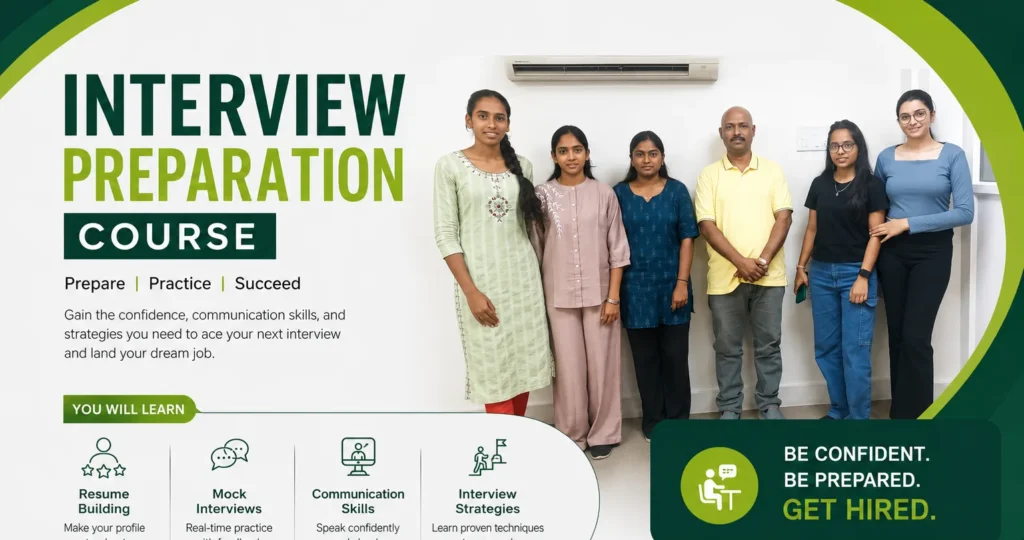
Walk into any institute with these five questions. The answers will tell you almost everything.
This includes us. Ask us the same things.
Question 1: Can You Show Me Verified Placement Statistics?
Anyone can claim 100% placement. Ask to see the proof.
What to look for:
- Batch-wise data from the last three to six months, not a lifetime total
- Average and median salary. The median is more truthful than the top package, because one outstanding placement can drag an average anywhere
- Actual placement percentage from a named batch
- The list of hiring companies
If an institute cannot show batch-level numbers, they either do not track them or do not want you to see them. Both are answers.
Question 2: What Does the Daily Schedule Actually Look Like?
A vague syllabus is a red flag. You need a clear, structured routine and a course format that matches how much preparation you actually need.
Interview preparation can usually be planned in three formats: a 2-day intensive course, a 6-day focused program, or a 1-month comprehensive course. A 2-day course is suitable for quick interview polishing, the 6-day format gives you more time for repeated practice and feedback, while the 1-month course allows deeper work on technical concepts, aptitude, projects, communication, and multiple mock interview rounds.
A good schedule should balance theory, hands-on practice, project work, and soft skills. It may look something like this:
Time | Session |
9:30 to 11:30 AM | Core technical concepts for your target role |
11:30 AM to 1:30 PM | Aptitude, reasoning, and problem solving |
1:30 to 2:30 PM | Break |
2:30 to 4:30 PM | Live project or case work |
4:30 to 5:30 PM | Communication and mock group discussion practice |
Ask to see the actual timetable for the specific batch and course format you plan to join. Not just a brochure. The timetable should clearly show what you will be learning and practicing each day.
Question 3: How Do You Support Students From Non-IT Backgrounds?
A one-size-fits-all approach does not work.
If you are from mechanical, civil, commerce or any non-technical background, the institute needs a proper beginner track that builds programming and domain fundamentals from scratch. Not the same batch as computer science graduates, moving at the same speed.
Ask for examples of students from your background who were placed, and what they moved into.
Question 4: What Does “Placement Assistance” Actually Include?
This is the most overused phrase in the industry. Break it down:
- How many interview calls do you actually provide?
- Do you run mock interviews with detailed feedback, and how many?
- Do you help with resume building and LinkedIn?
- Is there post-interview guidance when a round goes badly?
- What happens if I get a call three weeks after the course ends?
Vague answers here usually mean “we will share your resume and hope.”
Ready to ask us these questions? Call 9579414569, email [email protected], or book a demo session. We will answer all five without a brochure.
What a Strong Curriculum Looks Like
A good curriculum is the backbone of any placement interview preparation course. Here is what should be in it.
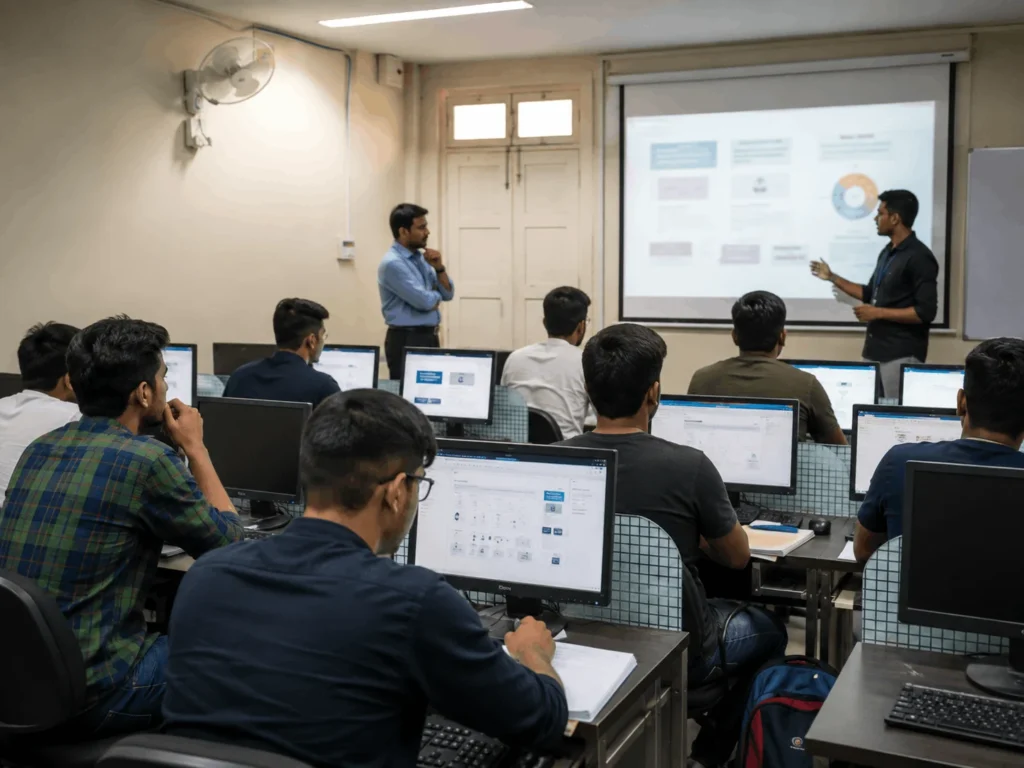
Technical and Role-Specific Skills
Whatever the target role requires, taught to the depth an interviewer will actually probe. Understanding and application, not memorised definitions.
For role-specific tracks, we run dedicated programmes for data analyst, business analyst, project manager and financial analyst interviews.
Aptitude and Assessment Rounds
Most large employers filter with an aptitude or online test before anyone reads your resume properly. You need practice on the formats companies actually use, not general puzzles. Our aptitude classes and assessment day training cover this stage.
Live Projects and Real Work
Theory is not enough. You need two or three projects you can demonstrate in an interview and put on your resume. This is what proves you can apply what you learned rather than recite it.
Soft Skills and Communication
Technical skills get you the interview. Soft skills get you the job.
Look for training in:
- Group discussions
- HR interview technique and behavioural questions
- Business communication, written and spoken
- Presentation skills
- Professional email and business etiquette
- Confidence building for candidates who freeze under pressure
Mock Interviews With Feedback
This is the part that changes outcomes.
A useful mock interview has four things: real conditions, questions you have not seen, a scoring rubric, and specific feedback straight afterwards. Do more than one. The first tells you what is wrong. The third tells you whether you fixed it.
Resume and Salary Conversations
Getting shortlisted is the first hurdle, so resume preparation matters. So does knowing how to handle expected salary questions and what to ask the interviewer at the end.
Free Coaching vs Paid Coaching: An Honest Comparison
There are free options in India and it is worth knowing what they give you.
AICTE partners with Internshala on a free placement preparation course covering interview skills, resume writing and job search. Hundreds of thousands of students have taken it.
Free online coaching | Structured paid coaching | |
Cost | Free | ₹10,000 to ₹20,000 typically |
Format | Recorded video, self-paced | Live sessions, fixed batch |
Feedback on your answers | None or automated | A trainer watching you and correcting you |
Mock interviews | Rare, usually not scored | Multiple, with rubrics |
Non-IT beginner track | No | Should be, if the institute is good |
Accountability | Entirely on you | Attendance, assignments, deadlines |
Our honest advice: if you are disciplined and your only gap is knowledge, start with a free course. There is no reason to pay for information you can get free.
Pay for coaching when your gap is performance. If you know the answers but freeze, ramble, or keep losing at the final round, no video will fix that. Only a person watching you and correcting you will.
Red Flags: When to Walk Away
- “100% placement assistance” with no written policy behind it.
- No batch-wise data, Only lifetime totals or a wall of photos.
- Only average salary quoted, never the median.
- Pressure to pay today for a discount that expires tonight.
- The same syllabus for freshers, experienced candidates and non-IT students.
- No named trainer. Ask who will actually teach you and what they have done.
- Vague “placement assistance” that nobody will break down into specifics.
- Fees far below the market. Comprehensive programmes have real costs. If it looks too cheap, something has been removed.
How Long Does a Placement Interview Preparation Course Take?
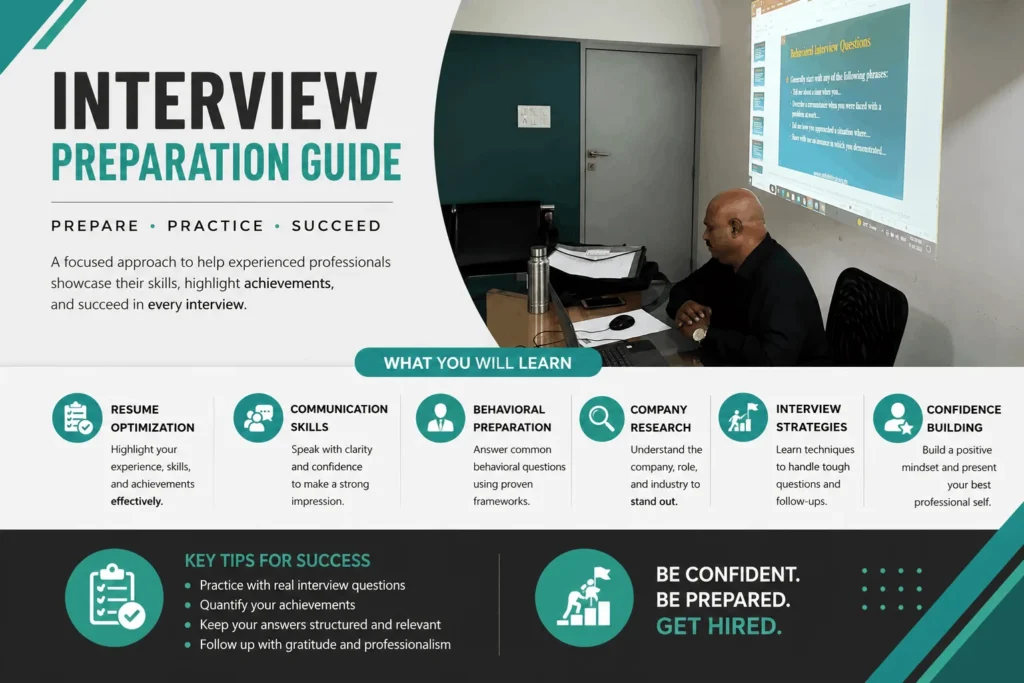
Most intensive programmes are flexible and can be completed in under a month, depending on how soon your interview is and how much preparation you need. You can choose from formats such as a 2-day crash course, a 6-day intensive programme, or a one-month comprehensive course.
If your interview is next week, a short intensive focused mainly on mock interviews, answer structure, confidence, and common interview questions may be more useful than a longer programme.
Weekend and part-time batches are also available for final-year students managing college schedules and for working professionals. Ask about the batch timings before you enrol, not after.
If you would rather study remotely, our online interview preparation course covers the same core material. If you are in Pune and your main challenge is nervousness, confidence, or interview presence, offline classroom sessions may be a better fit.
Premium Solutions: Transparency by Default
We think your decision should be based on facts, not fluff. So here is our side of the five questions.
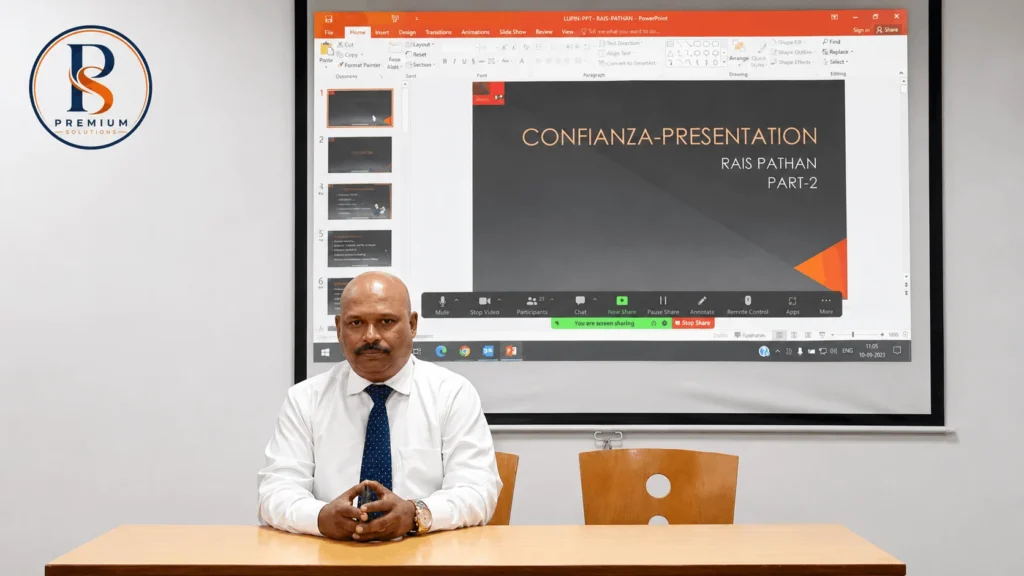
What we offer:
- A diagnostic before training starts, including psychometric assessment where useful
- Separate tracks for freshers, experienced candidates and non-IT backgrounds
- Interview skills training across HR, technical, managerial and panel rounds
- Mock interviews with structured written feedback
- Resume and LinkedIn work
- Career counselling where the right role is still unclear
- Online and offline delivery, plus one to one training
We do not promise you a specific salary. Nobody honestly can. What we commit to is measurable improvement in your interview performance, and a policy you can hold us to.
Ready to start? Call 9579414569, email [email protected], or register for the next batch. If you would rather ask questions first, get in touch and we will tell you honestly whether we are the right fit for you.
Frequently Asked Questions
What is a placement interview preparation course?
Training that prepares you for the interview stage of hiring. It covers aptitude tests, group discussions, resume building, HR and technical rounds, and mock interviews with feedback. The aim is to close the gap between what you studied and what employers test.
How long does a placement interview preparation course take?
Most intensive programmes run two to three months, depending on the track and your starting level. Short intensive options exist if you have an interview coming up soon.
How much do these courses cost in India?
A comprehensive programme with real placement support typically costs between ₹10,000 and ₹20,000. Be cautious of prices well below that, because something has usually been removed from the programme.
Are weekend or part-time batches available?
Yes. Many institutes run weekend batches for final year students managing college schedules and for working professionals. Confirm the timing before you enrol.
Which institute is best for a placement guarantee course?
The best one is whichever gives you transparent batch data, a detailed curriculum and a written guarantee policy. Use the five questions in this guide on every institute you shortlist, including us.
Do these courses help with off campus placements?
The good ones do. They train you to clear off campus drives and often have partnerships that lead to direct referrals, which matters more than campus access for most candidates.
Can a non-IT graduate get placed in tech through one of these courses?
Yes, but only with a programme that has a proper beginner track building fundamentals from scratch. Ask specifically about students from your background and what roles they moved into.
Is a free placement preparation course enough?
It can be, if your gap is knowledge and you are disciplined about self study. It is not enough if your gap is performance. Freezing, rambling or losing at the final round needs a trainer watching you, not a recorded video.
What is the difference between placement training and interview preparation?
Placement training is broader and usually includes technical skill building and company connections. Interview preparation focuses specifically on clearing the rounds. Most good programmes include both.
How many mock interviews should I do before a real one?
Enough to see improvement between them, which for most people is three to five, each followed by feedback and a revision round

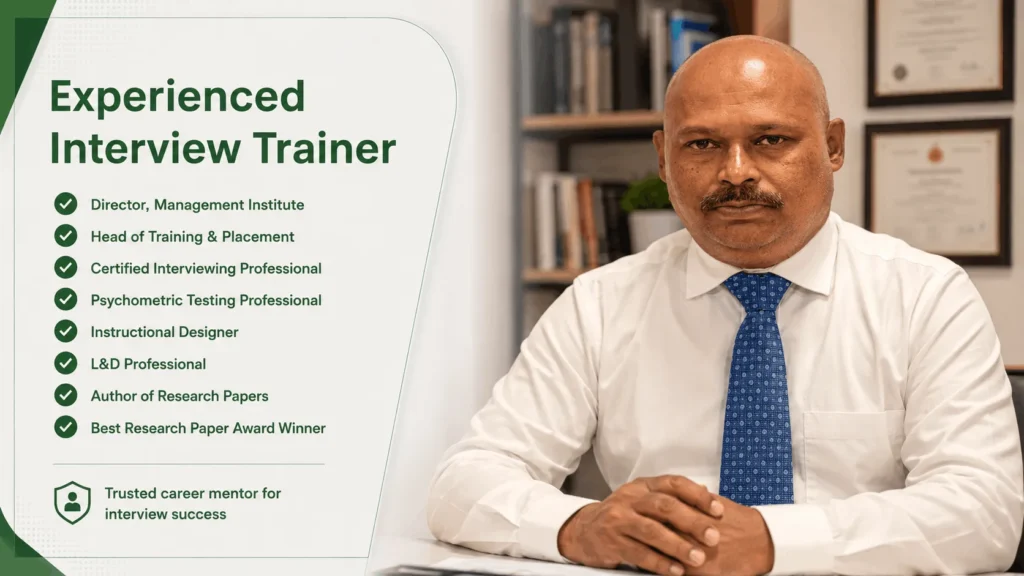
The author has served as Director of the Management Institute and Head of the Training and Placement vertical. The author has rich experience in training candidates for job interviews. The author is a certified Interviewing Professional, Psychometric Testing Professional, Instructional Designer, and L&D Professional. He has authored various research papers and received the best research paper award.