What Is an Interview Preparation Course for Experienced Professionals?
It is a training programme built for people who already have a career and need to move it forward.
A typical programme covers five areas:
- Career narrative building. Turning fifteen years of work into a three minute answer.
- Behavioural answer structure. Usually the STAR method, applied to your real projects.
- Leadership storytelling. Framing what you did as decisions, not tasks.
- Delivery coaching. Voice, pace, body language, and video presence.
- Mock interviews with feedback. Scored practice against real interview conditions.
Some programmes add psychometric assessment, resume and LinkedIn work, and salary negotiation.
How It Differs From Fresher Interview Coaching
A fresher is assessed on potential. You are assessed on evidence.
What is assessed | Fresher interview | Experienced professional interview |
Main question behind everything | Can this person learn? | Can this person deliver at our scale? |
Evidence expected | Academic record, internships, projects | Business outcomes with numbers |
Question type | Mostly knowledge and aptitude | Mostly behavioural and situational |
Rounds involved | HR round, technical round | HR, technical, managerial, sometimes panel or business case |
Common failure reason | Lack of confidence or basics | Rambling answers and unclear ownership |
What preparation must fix | Knowledge gaps | Communication and framing gaps |
This is why generic interview coaching does not help senior candidates much. You do not need to be told to research the company. You need help answering “tell me about a time a project you owned failed” in ninety seconds without sounding defensive.
If you are early in your career instead, the interview preparation course for freshers guide is the better starting point.
Why Experienced Professionals Still Lose Interviews
The market is not the problem. India’s white collar hiring grew 8% across FY26, the strongest pace in three years, according to Naukri’s JobSpeak Index. Senior talent is in demand. In IT sector hiring in February 2026, professionals in the 13 to 16 year experience band saw 50% year on year growth.
Employers are struggling to fill roles too. ManpowerGroup’s 2026 Talent Shortage Survey found that 82% of Indian employers report difficulty filling open positions, well above the global average of 72%.
So there are roles. There is demand. And yet strong candidates still get rejected.
The reason is usually not capability. It is that senior interviews test something most professionals have never practised: the ability to explain their own work clearly, on demand, to someone who was not there.
You have done the work. You have never had to sell it in ninety seconds to a stranger with a scorecard.
What Interviewers Actually Assess at Senior Levels
Most companies now use some form of structured interview. That means the interviewer has a fixed set of questions and a scoring rubric, and every candidate is rated against the same criteria.
This matters more than most candidates realise. Decades of research in personnel psychology, including the widely cited meta-analysis by McDaniel and colleagues and the later review by Levashina and colleagues, has consistently found that structured interviews predict job performance better than free flowing conversations. That is why companies moved to them.
For you as a candidate, this has a practical consequence.
The interviewer is not judging your story. They are ticking whether your story contained specific things.
If the rubric asks for evidence of stakeholder management and your answer never names a stakeholder, you score low even if the story was interesting.
Here is what senior rubrics usually look for:
Competency | What the interviewer is listening for | How to give it to them |
Ownership | Whether you say “I” or hide behind “we” | Name your specific decision and action |
Decision making | How you chose between options | State the options you rejected and why |
Scale | The size of what you handled | Team size, budget, users, revenue, geography |
Influence | Whether you moved people who did not report to you | Name the stakeholder and the disagreement |
Result | Whether anything changed | A number, a timeline, or a clear before and after |
Self awareness | Whether you can discuss failure | One honest failure with a concrete lesson |
If you want to work through these one by one, the guide on behavioural interview questions and the one on managerial round interview questions cover the most common formats.
The Three Skills That Decide Senior Interview Outcomes
Employers keep saying the same thing about what they need. The World Economic Forum’s Future of Jobs Report 2025 found that analytical thinking is the top core skill for employers, with seven out of ten companies calling it essential. Right behind it sit resilience, flexibility and agility, and leadership and social influence.
Leadership and social influence recorded the largest increase in importance of any skill compared to the 2023 edition, rising 22 percentage points.
None of those are technical skills. All three are things you have to demonstrate live, in a conversation, under pressure.
Communication: Turning Experience Into a Clear Story
For experienced candidates, communication is not about vocabulary. It is about compression.
You have ten years of context in your head. The interviewer has four minutes and no context at all.
Most senior candidates fail in one of two directions. Either they go too deep into technical detail that an HR interviewer cannot follow, or they stay so high level that nothing specific lands.
What to practise:
- Your career summary in under two minutes, ending with why this role
- Three to five achievement stories, each under ninety seconds
- One clean sentence explaining every job change on your resume
- Written communication, because senior processes often include a case study or a follow up email
Cut filler words. “Basically”, “you know”, “kind of” and “sort of” make a confident answer sound uncertain. Record yourself once and you will hear them immediately.
Structured business communication training is the fastest way to fix this if self practice is not working.
Leadership: Proving You Can Handle the Next Level
This is the section where most experienced professionals underperform, including people who genuinely lead teams.
The problem is that people describe their role instead of their leadership.
Weak: “I managed a team of ten.”
Strong: “I led a cross functional team of ten through a product launch. Two of them reported to another manager, so I had to negotiate their time. We shipped four weeks late but hit the revenue target in the first quarter.”
The second one has ownership, scale, influence, honesty and a result. The first one has a headcount.
If you do not have a manager title, you still have leadership evidence. Look for:
- A project you drove without being asked
- A junior colleague you mentored informally
- A process you changed that other teams adopted
- A decision you made when your manager was unavailable
- A disagreement you resolved between two teams
Leadership is influence, not designation. Interviewers know this. If you have moved to a first time management role, the first time manager training guide covers the transition in more depth, and manager interview training is built specifically for management round preparation.
Presentation: How You Come Across in the Room
Presentation in an interview is not slides. It is everything the interviewer perceives before they process your words.
That includes posture, eye contact, pace of speech, volume, how you handle a pause, how you sit on a video call, and what your background looks like.
Two things matter most and both are fixable in weeks:
- Pace. Nervous candidates speed up. Speeding up makes complex answers impossible to follow. Slow down by about twenty percent from what feels natural.
- Structure signalling. Start answers with a one line headline, then explain. “The short version is we cut onboarding time by half. Here is how.” The interviewer now knows where you are going and can follow you.
If panel rounds or business case presentations are part of your process, presentation skills training is worth doing before, not after, you start applying.
How to Prepare for a Senior Level Interview: A 7 Step Plan
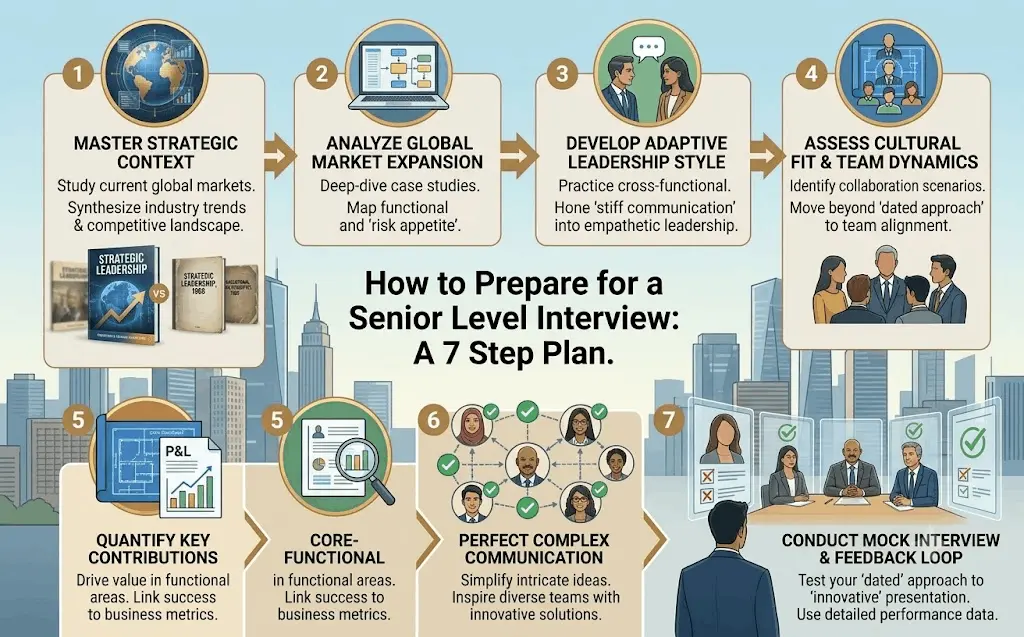
Follow these in order. Skipping step one is the most common mistake.
Step 1: Run an Honest Self Assessment
Find out which of the three areas is actually weak for you. Most people guess wrong.
Record yourself answering “tell me about yourself” and “tell me about a time you failed”. Watch it. Or take a psychometric assessment and ask two colleagues for blunt feedback.
Step 2: Decode the Role, Not Just the Job Title
Read the job description and list every competency it mentions. Then match one story from your career to each one. Any competency without a story is a gap you need to close before the interview, not during it.
Step 3: Build 8 to 10 Interview Stories
Write them out. Do not improvise them on the day.
Cover leadership, conflict, failure, a difficult stakeholder, a technical problem, a time you changed your mind, a time you delivered under pressure, and your biggest result.
Each story should be reusable for several different questions.
Step 4: Structure Every Story With STAR
STAR stands for Situation, Task, Action and Result. Most candidates know this. Most still get the proportions wrong.
MIT’s Career Advising and Professional Development office recommends this time split inside a STAR answer:
Part | Share of your answer | What goes here |
Situation | 20% | Just enough context. The interviewer does not need every detail. |
Task | 10% | What you were responsible for achieving |
Action | 60% | What you personally did. This is what gets scored. |
Result | 10% | The outcome, quantified wherever possible |
Almost everyone gets this backwards. They spend three minutes setting the scene and thirty seconds on what they did.
The Government of the Northwest Territories applicant handout makes the same point from the interviewer’s side: they expect the answer to clearly demonstrate the actions taken and the results achieved.
One more rule. Replace every “we” in your Action section with “I” and a specific thing you did. Interviewers cannot score what the team did.
Step 5: Prepare the Uncomfortable Questions
These are the ones that lose offers. Prepare a short, calm, honest answer for each that applies to you:
- Why did you leave your last job?
- Why so many switches?
- Why the gap in your resume?
- Why are you applying for a role at the same level or below?
- What are your salary expectations?
- Why should we hire you over an internal candidate?
Never criticise a former employer. Keep each answer under forty seconds and then stop talking. On salary specifically, the guide on how to reply to expected salary questions covers the phrasing.
Step 6: Do Scored Mock Interviews
Practising alone has a ceiling. You cannot see your own body language and you cannot hear your own filler words.
A useful mock interview has four things: real interview conditions, questions you have not seen, a scoring rubric, and specific feedback within an hour.
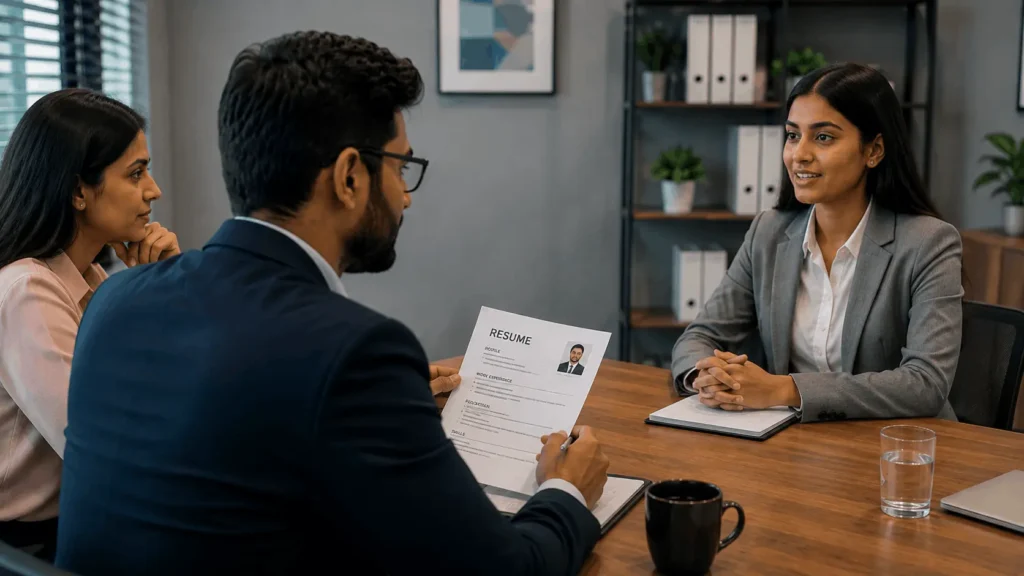
Do more than one. Do them with different interviewer styles, including a panel format if your process includes one. Mock interview sessions with structured feedback are the single highest return activity in the whole plan.
Step 7: Prepare Your Own Questions
Senior candidates are judged on what they ask. Weak questions signal weak interest.
Ask about the team’s biggest current problem, how success in the role is measured in the first six months, and why the position is open. The list of questions to ask the interviewer has more options.
What a Good Interview Preparation Course for Experienced Professionals Should Include
Use this checklist on any provider, including us. If a course fails three or more of these, keep looking.
- Separate track for experienced candidates. If the same syllabus is sold to freshers, it is not built for you.
- A diagnostic before training starts. Good programmes assess you first, then decide what to teach.
- Named number of mock interviews. “Mock interviews included” is not a specification. Ask how many.
- Recorded sessions. You need to watch yourself back.
- Written feedback against a rubric. Not just verbal encouragement.
- A trainer with hiring side experience. Someone who has actually sat on an interview panel.
- Work on your real career stories. Not generic templates.
- Sessions that fit around a full time job. Evenings or weekends.
- Coverage of video and panel formats. Not just face to face.
- Support after the course. For when you get an actual interview call three weeks later.
Questions to ask before you enrol anywhere:
- How many hours of one to one time do I get, as opposed to group sessions?
- Who will train me, and what is their background?
- How many mock interviews, and are they recorded?
- Will you work on my resume and LinkedIn, or only interview skills?
- What happens if I get an interview call after the course ends?
- Can I speak to someone at my level who has done this programme?
Providers who answer these clearly are usually worth your money. Providers who answer with brochures are usually not.
Online or Offline: Which Format Works Better for Working Professionals?
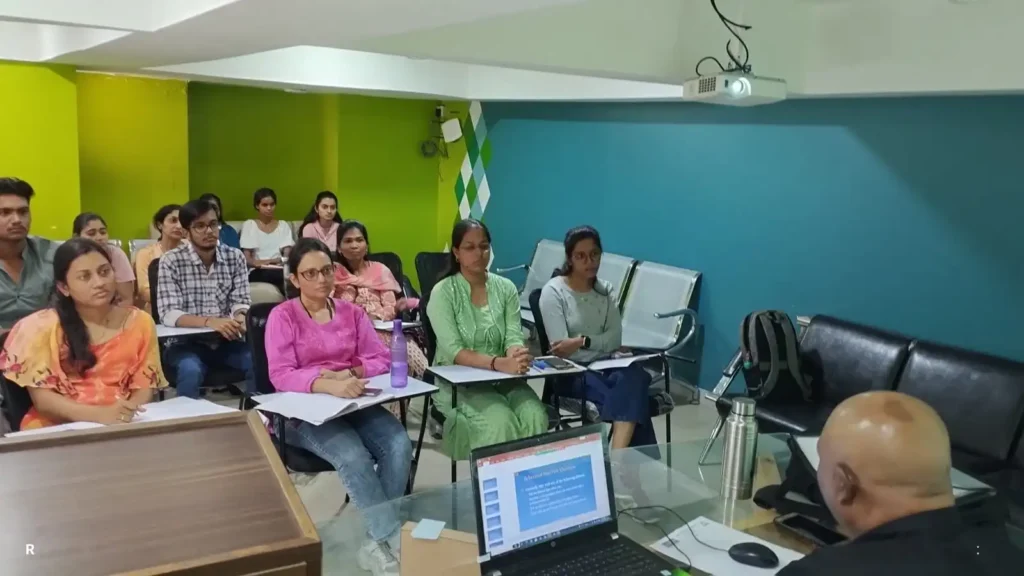
Both work. The right one depends on what you are trying to fix.
Factor | Online training | Offline training |
Schedule flexibility | High. Fits around work. | Lower. Fixed slots and travel time. |
Best for | Communication structure, answer building, video interview practice | Body language, panel simulation, group dynamics |
Video interview realism | Higher. You practise in the exact medium. | Lower, unless the trainer simulates it. |
Peer learning | Limited | Stronger |
Cost | Usually lower | Usually higher |
Recommended if | You are in a different city, travel often, or your interviews are remote | Your weak area is presence, nerves, or in person panel rounds |
Most experienced professionals are interviewing remotely at least in the early rounds, which makes online interview preparation the practical default. If your problem is nerves and physical presence, a few offline sessions in Pune alongside it works better than either alone.
How Long Does Preparation Take, and What Should You Ask About Fees?
Duration. For most experienced professionals, four to six weeks of structured preparation alongside a full time job is enough to make a visible difference. If you have an interview next week, focus only on steps 3, 4 and 6 above and skip the rest.
The variables that change the timeline are how far you are from your target level, how long since your last interview, and whether presentation or content is the weak area. Presentation habits take longer to change than answer structure.
Fees. Interview preparation courses in India vary widely, and most providers do not publish prices because programmes are customised by level and duration. That is normal, but it means you have to ask directly.
When you ask, get the answer broken down:
- Cost per one to one hour
- Cost per mock interview
- Whether resume and LinkedIn work is included or extra
- Whether there is any post course support and what it costs
A programme that looks cheap but includes one group session and no recorded mocks is not cheaper. It is smaller.
Mistakes Experienced Candidates Make Most Often
- Assuming the resume speaks for itself. It gets you the call. It does not answer the questions.
- Preparing content but not delivery. Knowing the answer and being able to say it clearly under pressure are two different skills.
- Using “we” throughout. Interviewers cannot score team achievements.
- Front loading the context. Three minutes of background and no action.
- Only preparing success stories. Every senior interview asks about failure. Have one ready.
- Not quantifying anything. “Significantly improved” scores lower than “cut it from 12 days to 5”.
- Talking too long. Ninety seconds per behavioural answer. Then stop and let them ask.
- Skipping practice because of ego. Seniority makes mock interviews feel unnecessary. It is exactly why they help.
AI Screening and One Way Video Rounds: What Changed in India
This is the part most preparation advice has not caught up with.
Large Indian employers, global capability centres and enterprise hiring teams have moved a big part of early screening to structured asynchronous video interviews. You record answers to preset questions on your own, with no interviewer present, and the recording is scored later.
If you have not interviewed in five years, this will be new to you.
What to do differently in a one way video round:
- Talk to the lens, not the screen. Looking at your own image reads as avoiding eye contact.
- You often get one take. Practise before you press record, not during.
- Structure matters even more. There is no interviewer to prompt you or ask a follow up. If your answer wanders, nobody rescues it.
- Keep answers tight. Most platforms cap response time. Ninety seconds is a safe target.
- Check the basics. Lighting in front of you, not behind. Quiet room. Stable internet. Plain background.
- Dress the same as an in person interview. Fully, not just the top half.
The upside for prepared candidates is real. Structured formats reward people who have practised structured answers, which is exactly what a good interview preparation course builds.
Role Specific Interview Preparation
Some roles have their own interview patterns, and general preparation only takes you so far. Premium Solutions runs dedicated programmes for:
- Project manager interview preparation
- Business analyst interview preparation
- Data analyst interview preparation
- Financial analyst interview preparation
- MBA interview preparation
The full list of programmes sits on the interview preparation hub.
How Premium Solutions Prepares Experienced Professionals
We are a soft skills training and placement institute based in Pune, working with working professionals, team leaders, new managers and business owners across industries.
Our interview preparation programmes for experienced candidates are built around adult learning principles, which in practice means we do not lecture. We diagnose, then we practise, then we give you feedback on your own material.
What is included:
- Diagnostic assessment, including psychometric testing where useful
- Communication skills training, written and verbal
- Leadership and decision making narrative work
- Presentation skills training for panel and case rounds
- Mock interviews with structured expert feedback
- Career counselling where the right next role is still unclear
- Online and offline delivery, with one to one options
We usually recommend at least three to five scored mock interviews before a role you care about, with feedback and a revision round after each one. One mock tells you what is wrong. Three tell you whether you fixed it.
Ready to start? Call 9579414569, email [email protected], or register for a programme. If you would rather talk through your situation first, get in touch and we will tell you honestly whether we are the right fit.
Frequently Asked Questions
How is an interview preparation course for experienced professionals different from one for freshers?
Freshers are assessed on potential and basics. Experienced candidates are assessed on evidence, ownership and scale. The course content shifts from teaching interview fundamentals to structuring real career stories, handling behavioural and managerial rounds, and improving delivery under pressure.
Is an interview preparation course worth it if I already have ten years of experience?
It depends on where you are losing. If you are getting interview calls but not offers, the gap is almost always in how you present your work rather than the work itself. That is exactly what these courses fix. If you are not getting calls at all, fix your resume and LinkedIn first.
How do I answer leadership questions if I have never had a manager title?
Use examples where you influenced outcomes without authority. A project you drove, a colleague you mentored, a process you changed, a decision you made when nobody else would. Structure each one with STAR and make sure the Action section says what you personally did.
How many mock interviews should I do?
Enough to see improvement between them, which for most people is three to five. One mock only identifies problems. Repeated mocks with feedback in between are what actually change your delivery.
How long should each interview answer be?
Around ninety seconds for behavioural questions, and under two minutes for “tell me about yourself”. Longer answers reduce your score because the interviewer stops following you and cannot fill in their rubric.
Can I do interview preparation while working full time?
Yes. Most experienced professionals do. Sessions are scheduled in evenings or on weekends, and online delivery removes travel time. Four to six weeks is a realistic window alongside a full time job.
Do you offer interview preparation online as well as in Pune?
Yes. Both formats are available and they cover the same material. Online is usually the better fit if your interviews are remote or you are in another city. Call 9579414569 or visit softskillstraining.in to discuss which suits your situation.
What should I do about one way video interview rounds?
Practise in the same medium. Record yourself answering questions on camera, look at the lens rather than the screen, keep answers under ninety seconds, and check your lighting and background beforehand. Structure matters more in these rounds because there is no interviewer to prompt you.
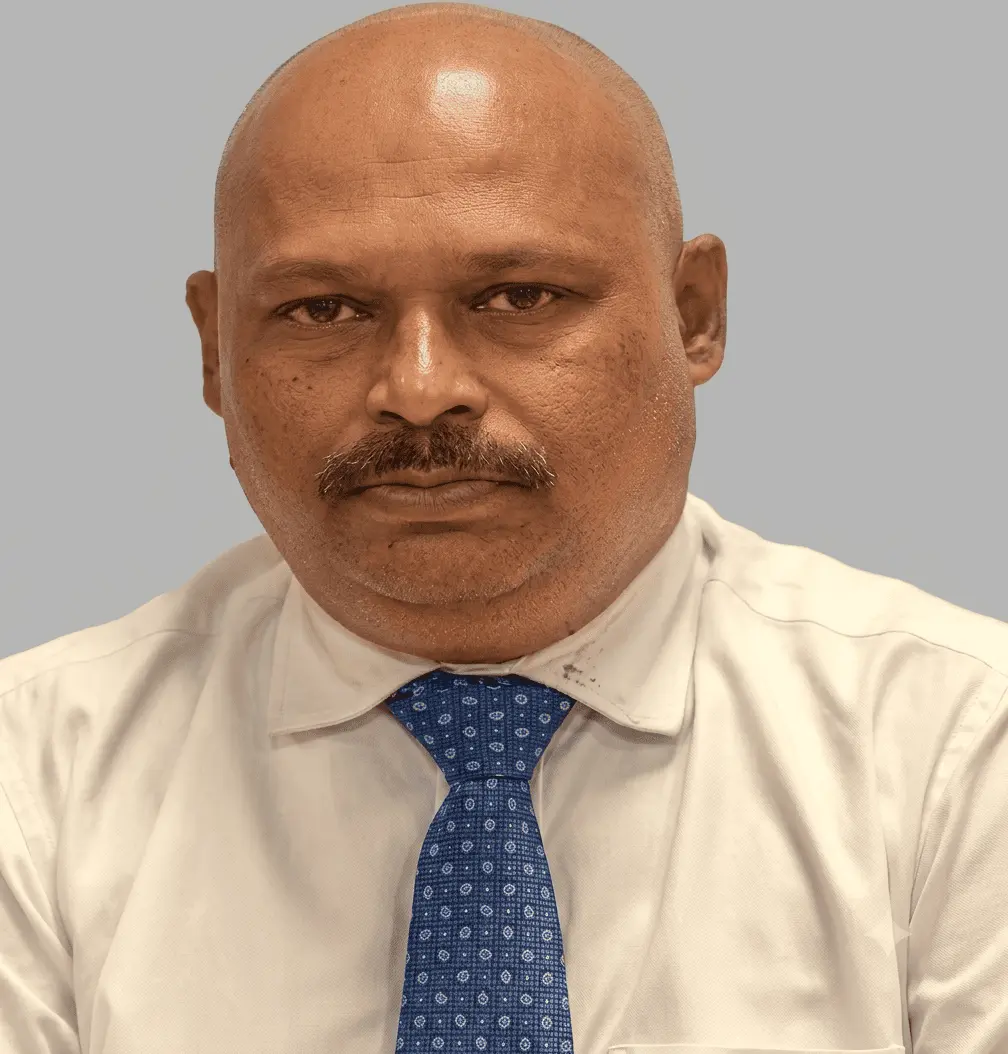
The author has served as Director of the Management Institute and Head of the Training and Placement vertical. The author has rich experience in training candidates for job interviews. The author is a certified Interviewing Professional, Psychometric Testing Professional, Instructional Designer, and L&D Professional. He has authored various research papers and received the best research paper award.